The Memorial Park “The Hill of Peace” is a memorial complex with several monuments: the Ossuary of the fallen fighters of Takovo region; the Ossuary of the fallen Red Army soldiers; memorial birch trees; a Monument to the Takovo fighters killed in Norway; a mountain house; a Monument to the internees killed in Norway; a Monument to the internees killed in Mauthausen; a Monument to the fighters for Serbian freedom and eight busts of national heroes of Rudnik and Takovo Region.
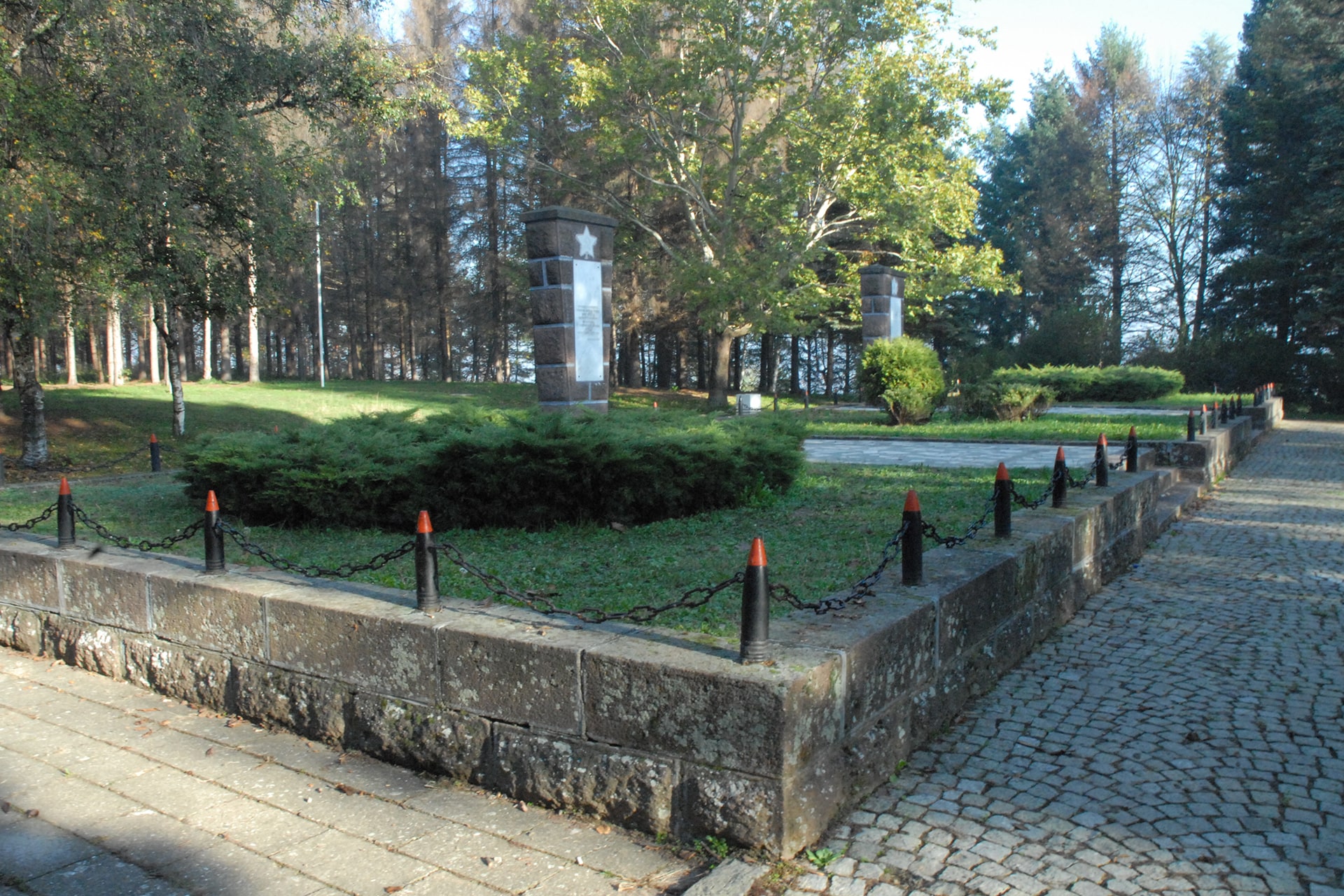
It used to cover about 4.5 hectares with over 3,000 trees of 50 different kinds of coniferous trees, deciduous trees and decorative bushes. Trees were planted by high school children from Gornji Milanovac between 1961 and 1966, and the reason for this were the existing ossuaries: the ossuary of the fallen fighters from the Second Proletarian Brigade built in 1956, as well as the ossuary of the Red Army fighters. The Ossuary of the fallen Red Army soldiers was expanded in 1962 with an identical ossuary of the Takovo Region fallen fighters. The remains of 408 soldiers and Red Army officers, who died in 1944 in fights for the liberation of Čačak mostly, were transferred there. The idea for the design of the ossuary belongs to Desimir Žižović Buin from Gornji Milanovac, who created the famous comic book for children – Mirko and Slavko. Two monuments of the same size were made of rustic cut stone cubes of red granite with slightly arched tops. Plates containing the text about the monument dedication together with the names of the fallen soldiers were made of white marble, and above them there is a five-pointed star with the hammer and a sickle, which are carved in the white marble. Both tombs have a mutual fence – artillery shells connected with chains. The monument was unveiled by Josip Broz Tito and the then president of the Supreme Soviet of the USSR Leonid Brezhnev. The statesmen planted white birch trees over the graves of Soviet soldiers then, as a symbol of Russian land where they had come from.
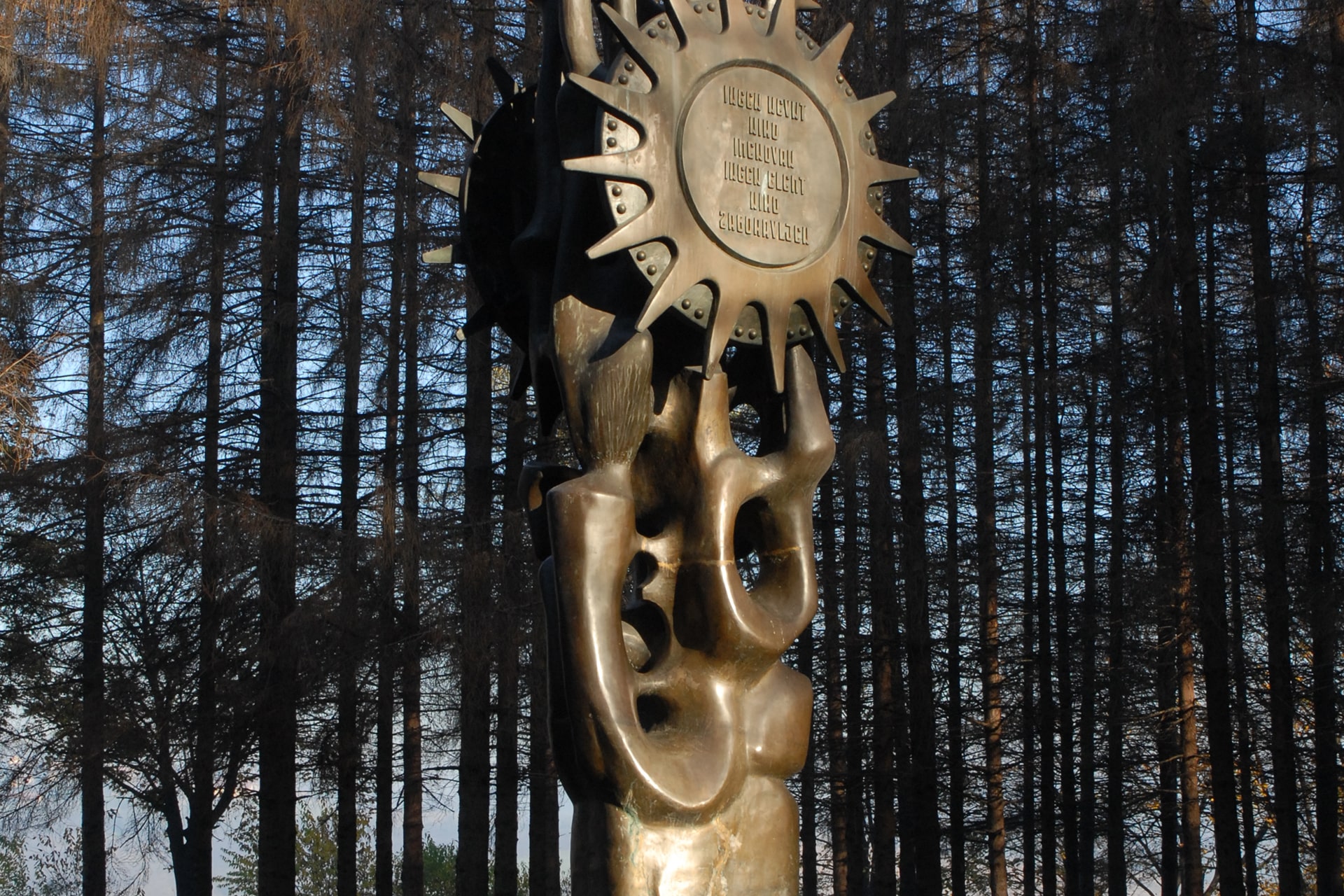
Following that, year after year until the present day, the Hill of Peace got new monuments – memorial marks, which often represented the tragic history of this region. To commemorate 3,000 killed and deceased concentration camp prisoners from the then Yugoslavia captured by Germans, a Monument to internees in Norway was made in 1973. The sculpture, which was a work of art of a sculptor Živorad Žika Maksimović from Čačak, symbolises a camp with barbed wire where many died a martyr’s death, as well as a tree of life and death growing from human bones on a grindstone. The monument is placed on a burial mound, where one can find a rectangular base of black marble with a carved coat of arms at the front. There is a marble pedestal on the base in the shape of a grindstone where bronze part of the monument is rising with a couple of thorny spears on the top. The middle part of the monument has a Viking shield and a sun, together with texts written in both Serbian and Norwegian language: No one named, no one forgotten. On the other shield (on the opposite side), there are the following lines: No! No one should be sad over our graves. With the sound of avalanches, at the place where the cold weather reigns, may only the whirlwind circle above the dead in the polar night that gloomily wears on. In front of the monument, two plates are placed: the first bronze one with an explanation that the monument is put up to honour those who died in 24 Nazi camps in Norway – from Bergen to Karasjok – between 1941 and 1945. The other colourful marble plate provides the information that a lump of Norwegian soil is put under the monument. Six polar juniper trees, which were brought from the same area, were planted around the monument.
A special monument was built in 1973 to commemorate internees from Takovo region who died in the aforementioned fascist camps in Norway. That was also Živorad Maksimović’s work of art. It is made of concrete, and it consists of two parts – the bottom one in the shape of trapezium, and the rectangular top one with a bronze plate containing the names of 33 people from Takovo who didn’t come back home. The same year, a wooden mountain house was built at the Hill of Peace to remind people of a touching humane story. To be more precise, during the Second World War on the mountain Stjerne, not far away from Levanger in Norway, both Norwegian resistance movement fighters and villagers built a wooden house, which are common for Norwegian mountains, and they left food, clothes and firewood there so that runaways from Nazi camps would reach easier the neighbouring neutral Sweden.
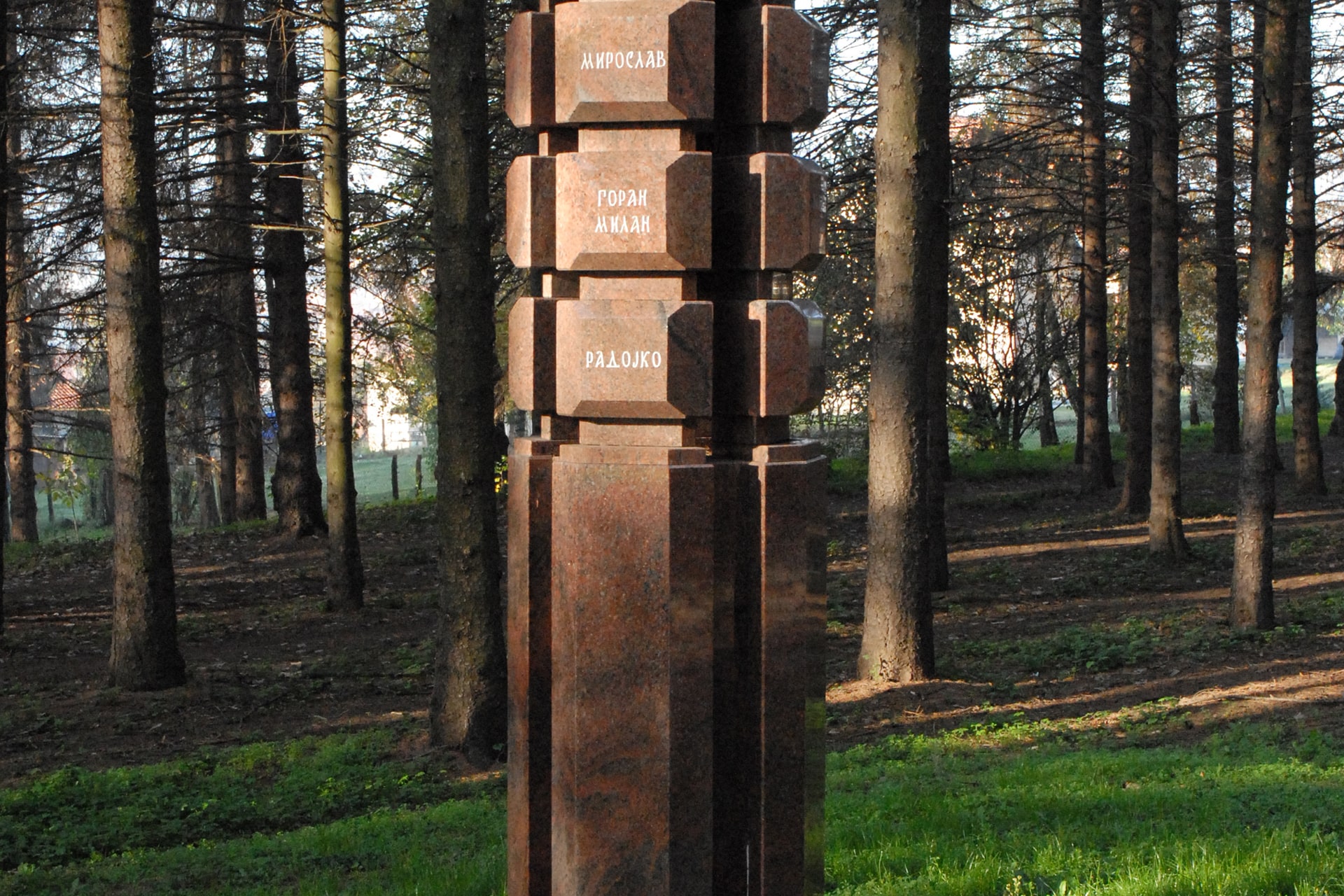
The monument to the internees killed in Mauthausen is the only monument in the world put up outside the Austrian territory, and which is dedicated to the killed and died prisoners of the concentration camp Mauthausen. Among 120,000 people who died in the camps, there were 13,000 Yugoslavs, mostly Serbs. The monument represents the “stairs of death” of Wiener Graben quarry with hands of prisoners carrying rocks. A piece of granite from that quarry was built into the monument. The monument to the fighters for Serbian freedom with marked names of eighteen townsmen from Rudnik and Takovo Region, who died between 1991 and 1999 in war confrontations at the territory of former Yugoslavia as well as during NATO aggression, is a work of art of academic sculptor Nebojša Savović Nes put up in 2000.
Seven busts of national heroes from Rudnik and Takovo region were relocated to the Hill of Peace from the town park and one from the factory PIK “Takovo” in 2002. Those are stone monoliths with busts of Tihomir Matijević, Milutin Luković, Radovan Grković, Dragomir Dražević, Svetozar Popović, Desimir Jovović Čiča, Radislav Janićijević Bomba and Tadija Andrić. Two last ones don’t exist anymore – they were stolen from their pedestals. The centre of the Museum activities is the family Brković’s house in 7 Sinđelićeva Street in Gornji Milanovac, where the Legacy of Nastasijević brothers together with the permanent exhibition ‘Presents and Repurchases of the Obrenović dynasty’ are located.