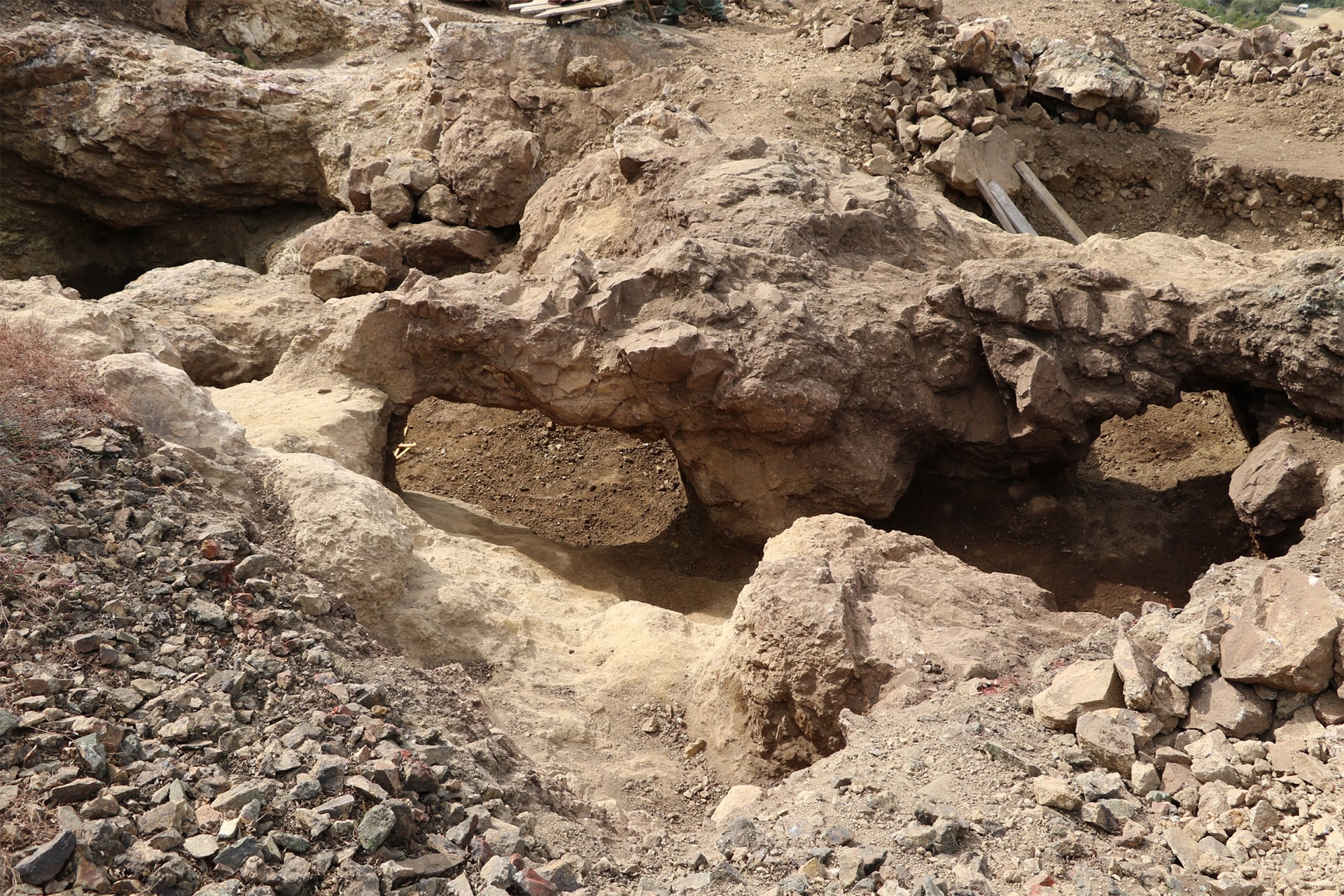
Following the decision of the Government of the Republic of Serbia (05 number 633-1441/2017, dated 23 February 2017), Prljuša site on Rudnik mountain was declared an archaeological site – a territory of special historical and cultural importance. The site was registered in 1980, and excavations which started in the 1980s continued in 2010, in the organisation of the Belgrade Institute of Archaeology and the Museum of Rudnik and Takovo Region.
Raw materials from Prljuša, such as rock crystal and malachite, were used way back in the Neolithic period. The exploitation of the copper ore dates back to the early Copper Age (the Chalcolithic Age) and it is related to Bubanj-Hum I culture (around 4,000 BC). More than twenty prehistoric shafts were documented to exist at the site. The whole hillside is covered with large scree, where one can find prehistoric hammerstones with a groove.
Findings so far are related to the youngest shafts on top of the site, because prehistoric miners dug from the bottom to the top of the hill, putting coal waste to the old shafts. Metal items made from this mine’s ores were discovered in the Chalcolithic Age necropolis in Dolnoslav (South Bulgaria), which proves the significance of the oldest mine exploitation as well as rich and varied trade in the Balkans.
Archaeological site Prljuša is of great importance since it is the biggest known prehistoric copper mine in Europe, based on the surface it covers, visible mine shafts, and discovered miners’ tools.