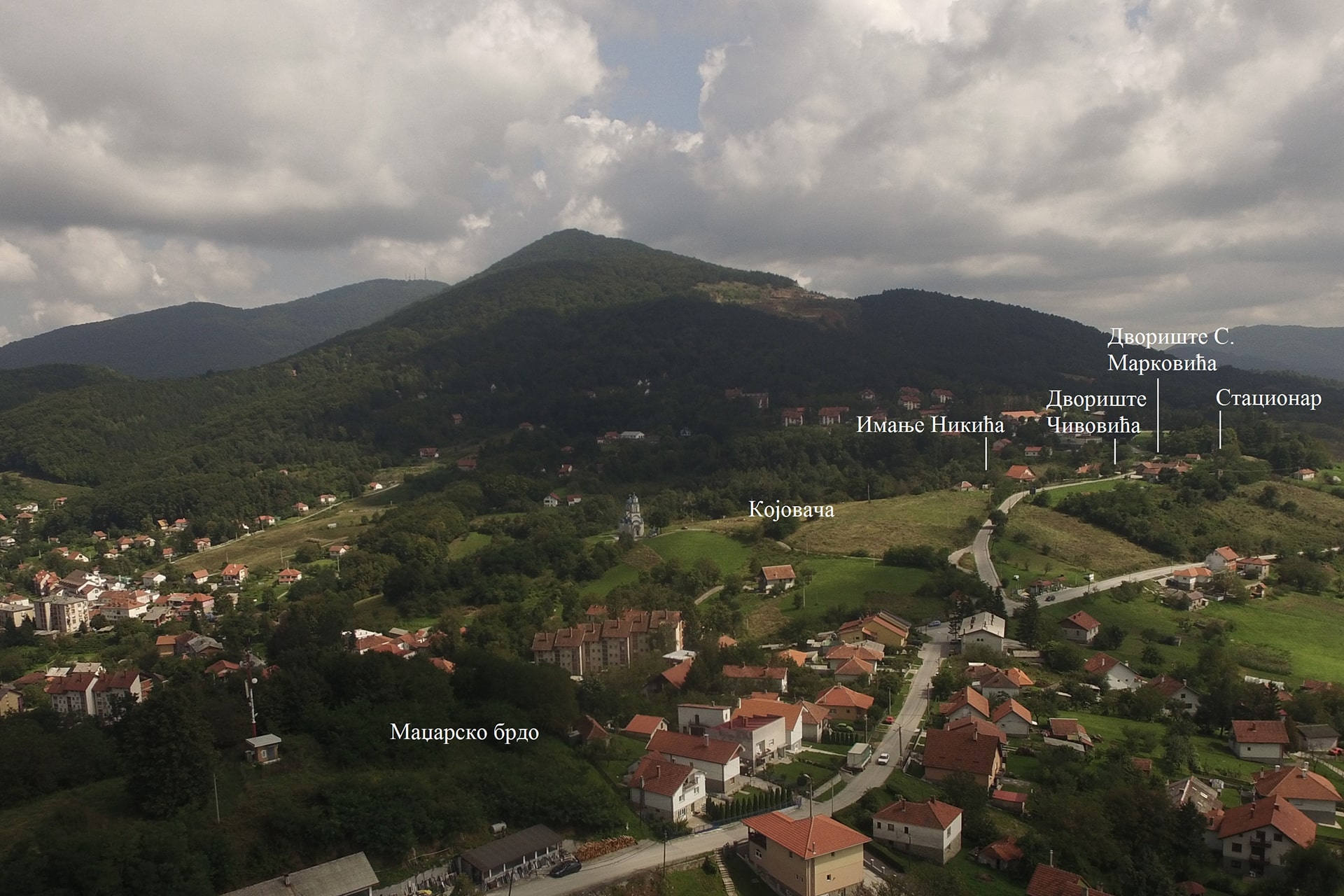
The intensive exploitation of mineral resources of the Rudnik mountain started during the early neolithic period. This area was actively included in the economic and administrative life of the Roman Empire. In the Middle Ages, Rudnik was not only a mining centre which brought a huge revenue to Serbian rulers, but also one of the most important squares and city centres.
In 1865, PhD Janko Šafarik noted down the first data on the place which can be connected to Drenje. The walls of “numerous big buildings and houses”, and especially one “church” of great proportions could be spotted at that place. Not far from there, in Staro Rudničište, Šafarik conducted the first known archaeological diggings in Serbia.
The research which started in 2009 confirmed the assumptions of the previous researchers stating there were remains of a bigger settlement (at least three churches and numerous houses) from XIV-XV century, between the source of the river Zlatarica and south slopes of Mala Kelja. Archaeological findings confirm the data from the written sources about the existence of the area settled with rich town aristocracy, where both handicrafts and trade (run by merchants from the maritime regions) were developed. The research was financed by the Municipality of Gornji Milanovac and the Ministry of Culture and Information of the Republic of Serbia.
The sites in Drenje were declared to be immovable cultural goods – an archaeological site in 2014 (the decision of the Government of Serbia 05 number 633-10627/2014).